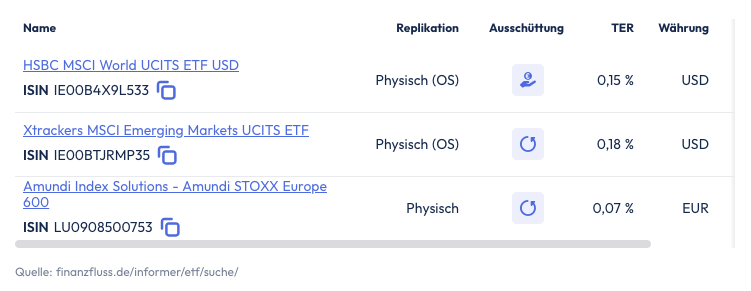
ETF Portfolios
A portfolio refers to the collection of investments, which can be structured with various weightings and asset classes. Here, we’ll look at well-known ETF portfolios with examples.
70/30 Portfolio
The 70/30 portfolio is a classic among portfolios with global ETFs.
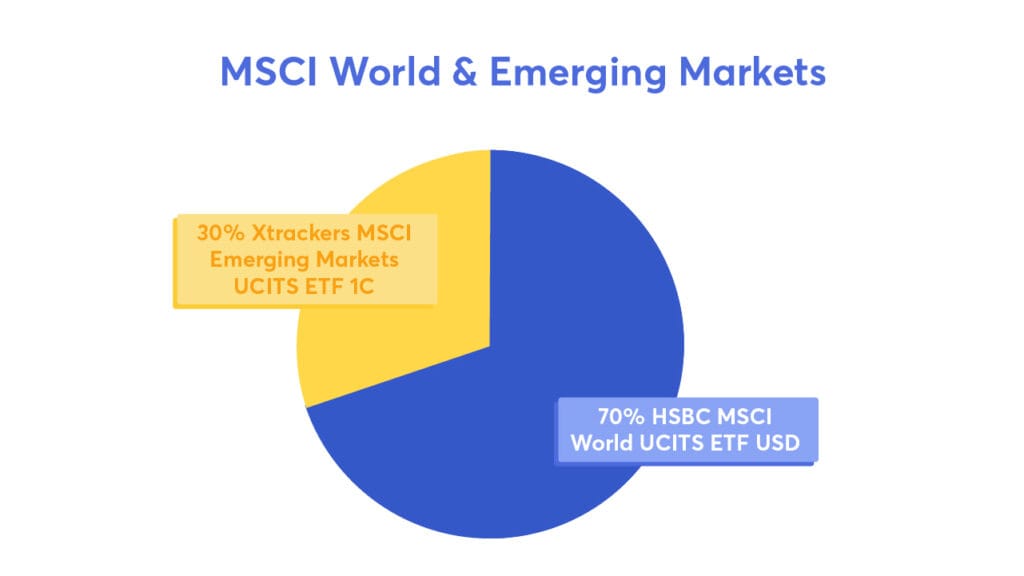
- It is a combination of the MSCI World and MSCI Emerging Markets indices, typically allocating 70% to MSCI World and 30% to MSCI Emerging Markets.
- offers broad exposure to both developed and emerging markets, providing a balanced approach to global diversification.
Variant 1
HSBC MSCI World ETF (dist) + Xtrackers Emerging Markets ETF (ACC)
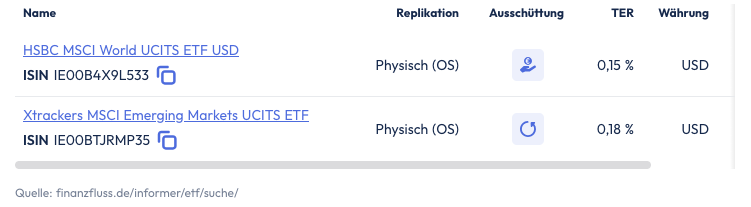
Both ETFs are characterized by a fund volume greater than 100 million euros and a low Total Expense Ratio (TER).
Variant 2
Alternatively, you can also use the products from FTSE. With the FTSE Developed World and FTSE Emerging Markets, there are two very similar ETFs. The differences and similarities of world indices are discussed in this article. It is important to note that mixing the two index providers is NOT advisable, because they have different methodologies and weightings, which could lead to imbalances in your portfolio.
Gerd-Kommer-World Portfolio
- Important components of this portfolio include a stable, risk-free part and a risky part for generating returns.
- Building the entire portfolio according to Gerd Kommer is quite complex and not recommended for beginners.
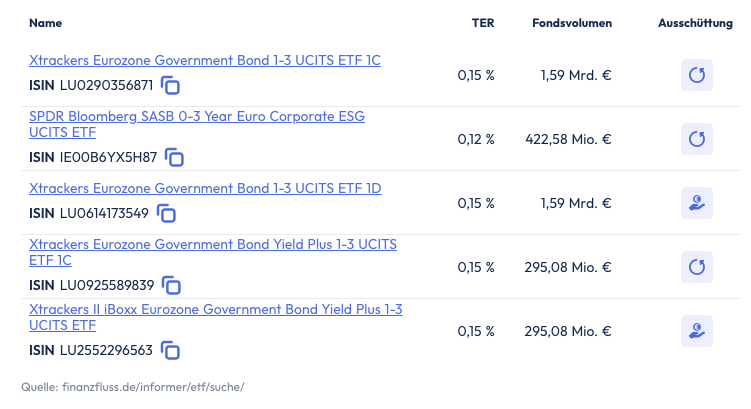
if you want to adopt some parts of the Kommer Portfolio, the following ETFs could be used as examples:
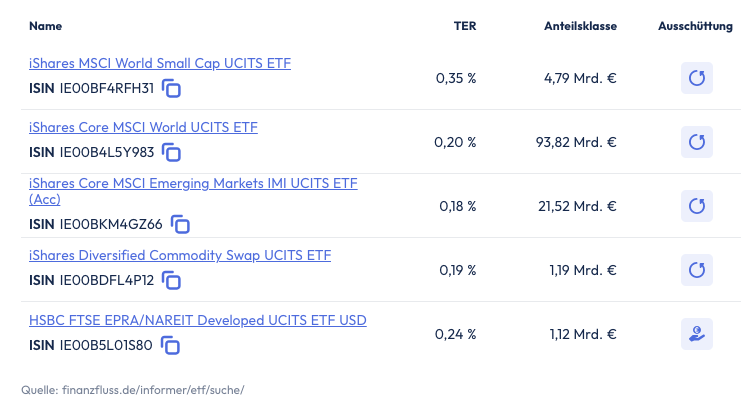
For the risk-free part, one of these short-term government bonds could be added:
Allwetter-Portfolio
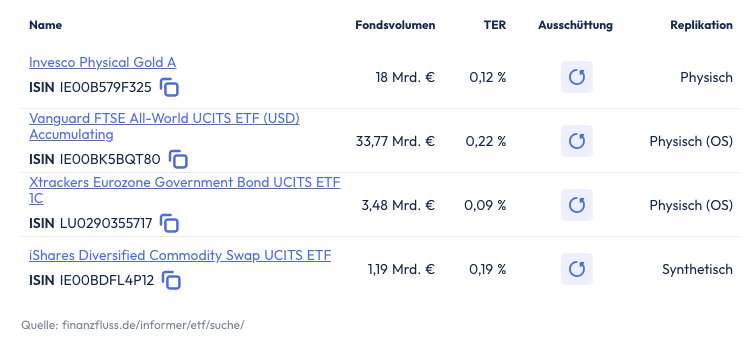
The All-Weather Portfolio, designed by hedge fund manager Ray Dalio, aims to withstand all market storms. It focuses on four asset classes: bonds, stocks, gold, and other commodities. The All-Weather Portfolio can be fully replicated using ETFs.
Example:
Pantoffel Portfolio
The Pantoffel Portfolio, created by the consumer organization Stiftung Warentest and its magazine Finanztest, gets its name from the comfort it provides once set up. It comes in three variations, depending on risk tolerance or need for security. This portfolio is considered beginner-friendly and well-suited for relaxed, long-term investing.
Sustainable 70/30 Portfolio
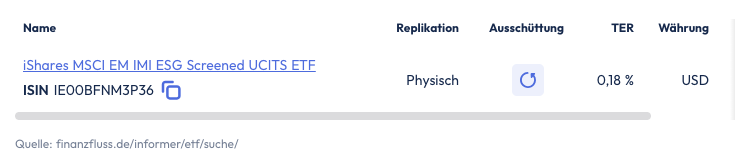
A sustainable world portfolio represents the global economy while excluding unethical investments
- The definition of what is considered unethical varies
- Common standards include ESG (Environmental, Social, and Governance) and SRI (Socially Responsible Investing) labels.
- The classic world portfolio can be reconstructed based on these criteria.
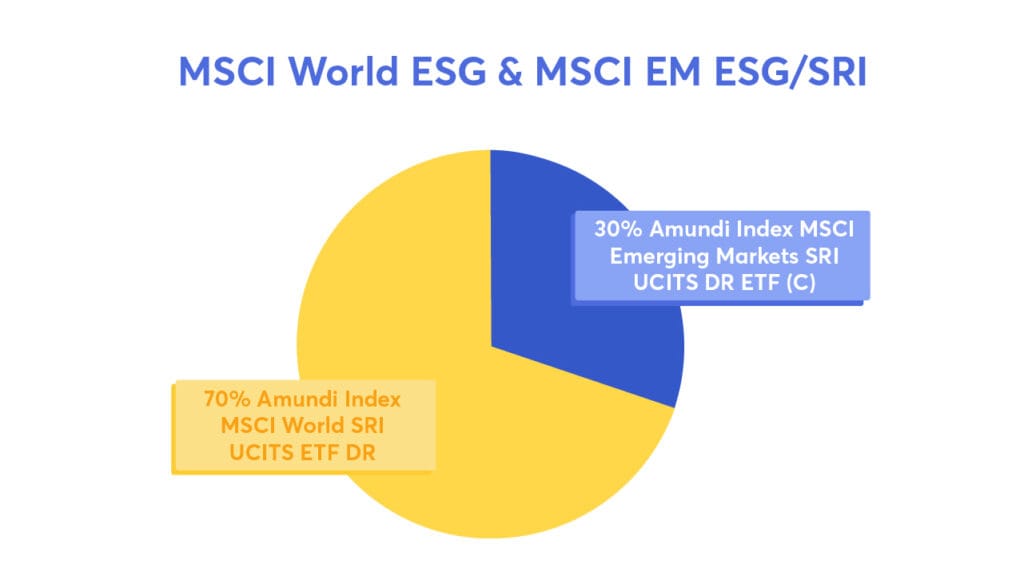
Example 1
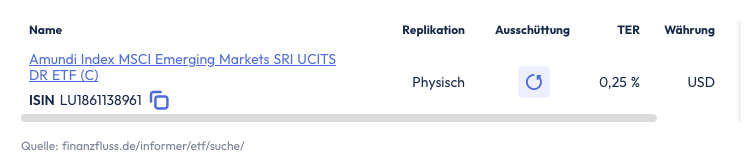
The ESG and SRI labels differ in that SRI applies significantly stricter criteria, completely excluding any stocks from the parent index that do not meet its standards.
Example 2
Just One ETF
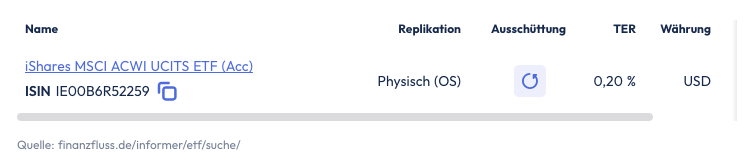
This is possible with the MSCI All Countries World Index (ACWI), which combines stocks from both developed and emerging markets.
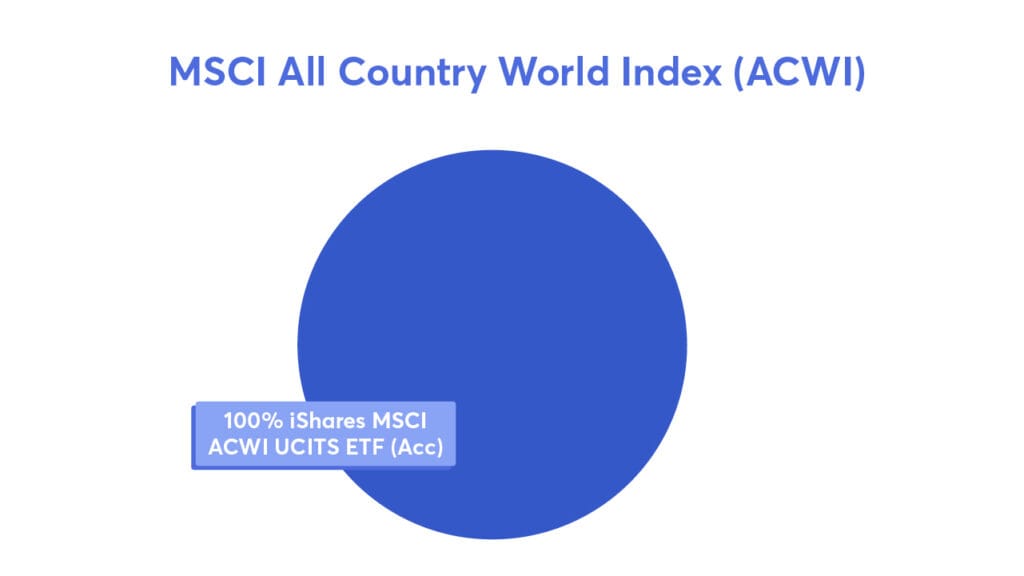
Variant: iShare
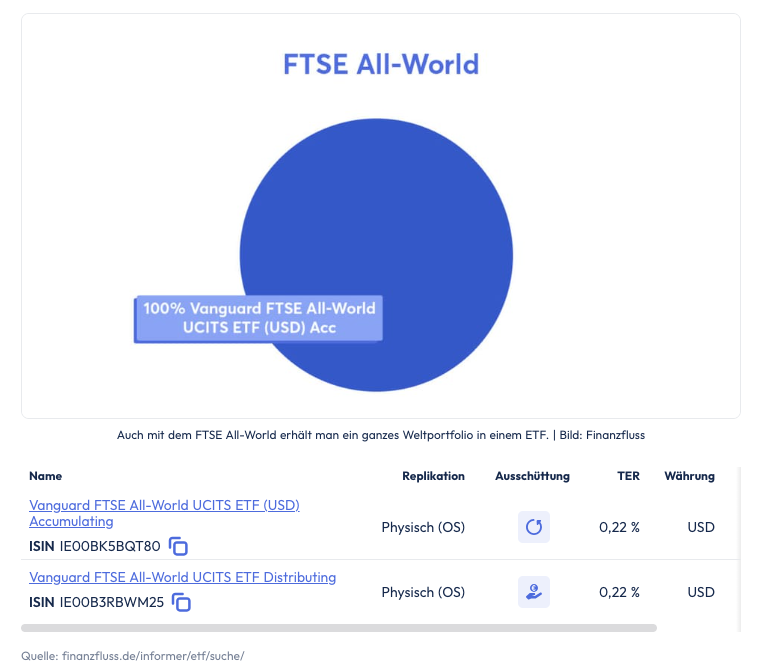
Variant: Vanguard FTSE All-World
Dividends
If you prefer a world portfolio with high distribution yields, you can best achieve this with dividend ETFs. This is purely a matter of personal preference, as the total returns do not differ from a non-dividend-oriented ETF world portfolio.
Suitable options
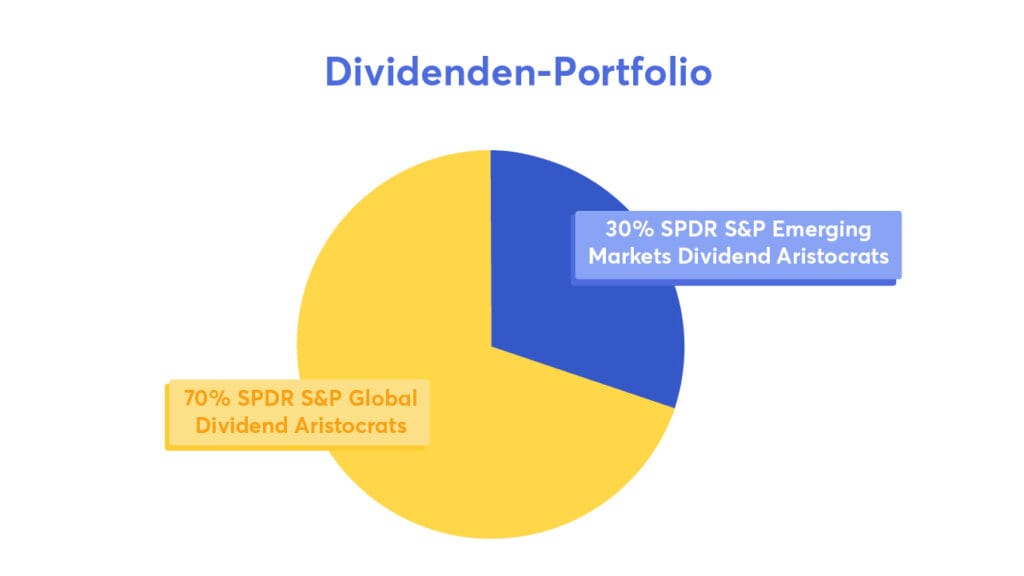
Following 70/30 world portfolio: SPDR S&P Global Dividend Aristocrats UCITS ETF (70%) and the SPDR S&P Emerging Markets Dividend Aristocrats UCITS ETF (Dist) (30%). Both ETFs use optimized sampling for physical replication, have solid fund volumes, and are available through brokers like DKB.
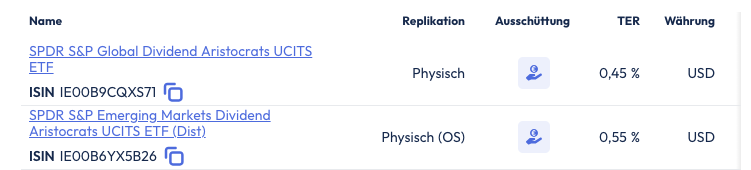
Vanguard FTSE All-World High Dividend Yield UCITS ETF Acc: tracks the FTSE All-World High Dividend Yield Index and stands out with a low TER (Total Expense Ratio).
Stocks + Commodities + Real Estate
Many investors prefer to complement their stock investments with a small allocation to commodities and/or real estate to complete their world portfolio. This can be easily achieved by adding:
- REITs (Real Estate Investment Trusts) for real estate exposure
- Commodity ETFs or ETCs for commodities
This diversification helps reduce risk and increase stability in different market conditions.
Recommendation for commodities is the L&G Commodities ETF, which has a good fund volume and reasonable pricing. It synthetically tracks assets in the following sectors:
- Energy (22.8%)
- Precious Metals (19.1%)
- Agriculture (33.1%)
- Industrial Metals (19.7%)
- Livestock (5.3%)
An alternative option is the iShares Diversified Commodity Swap, which also synthetically replicates commodity assets.
Recommendation for real estate exposure is HSBC NAREIT, which focuses on listed real estate companies in developed countries.
50/30 Portfolio with More Europe
Due to the tendency for the United States to be overweighted in traditional global index ETFs (like those from MSCI) relative to GDP, as a result of the market capitalization-based weighting, some investors prefer to add more European stocks to their portfolios. A good option for this is an ETF based on the STOXX Europe 600 Index.
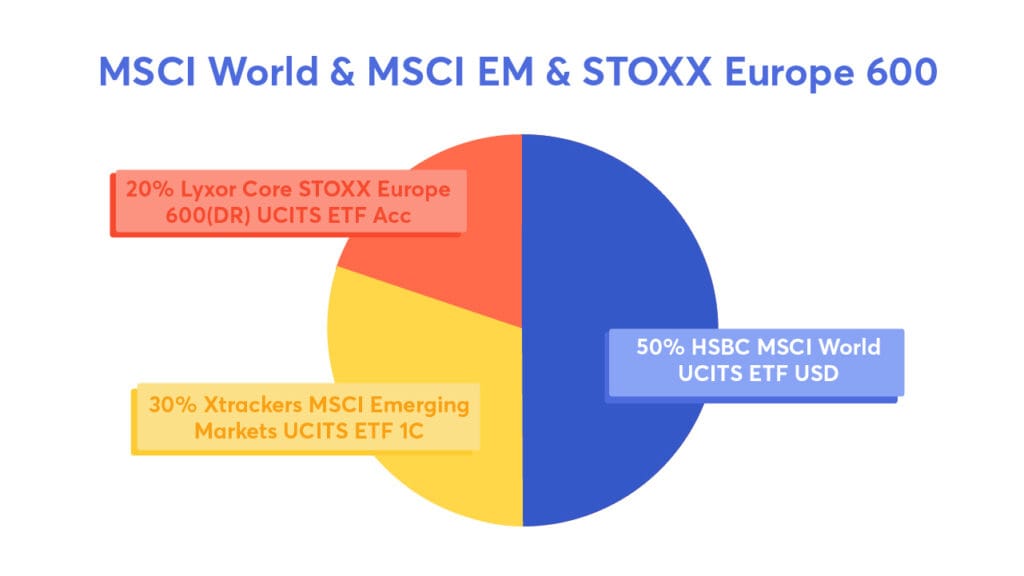
Example: